The Holocaust
Diary of Anne FrankThe Holocaust enters The Diary of a Young Girl not as a complete historical account but as the pressure surrounding a young diarist’s life: restrictions imposed on Jews, the disappearance of people she knows, and the increasingly grave news brought into hiding. Anne Frank records what she experiences directly alongside what she hears from helpers and broadcasts, preserving both the force and the limits of a witness’s knowledge. The resulting testimony connects large-scale persecution to the choices, fears, and moral tensions of life in the Secret Annex.
Policies and the narrowing of daily life
Anne’s account traces the effects of occupation through restrictions that governed ordinary movement and activity. Jews had to wear a yellow star and surrender their bicycles; they could not use streetcars or cars, and were confined to particular shopping hours. The prohibitions extended to entertainment, sports, public rowing, and visiting Christian homes; Jews were also required to attend Jewish schools. The accumulation matters: persecution appears not only as a future threat but as a sequence of rules that steadily removed access to shared public life.
The pressure had begun to reach Anne’s family before the German occupation of the Netherlands. Relatives in Germany were already suffering under anti-Jewish laws; after the 1938 pogroms, Anne’s two maternal uncles fled to North America, while her elderly grandmother came to live with the family. These earlier upheavals make the later restrictions part of a growing history of separation and danger rather than a sudden, isolated change.
The family’s decision to hide followed that escalation. They had been moving furniture and clothing out of their apartment for months and initially planned to go into hiding on July 16. When Margot received a call-up notice, the plan was advanced by ten days. The hiding place was in Otto Frank’s office building in Amsterdam, where the family relied on a small circle of informed helpers while keeping their presence from others who worked in the warehouse. The change from a home subject to restrictive laws to concealed life in an office building gives the diary’s record of persecution a precise domestic and spatial context.
News of deportation and the limits of knowledge
The diary conveys the fate of people outside the Annex through distinct channels of information. In October 1942, Anne reports that friends and acquaintances were being taken away in large numbers. She attributes information about the treatment and conditions at Westerbork to Miep’s account, and information about the killing of Jews to the English-language radio. Her words preserve the alarm of the moment, but also mark a difference between what she has been told, what she has heard in a broadcast, and what she can know from hiding.
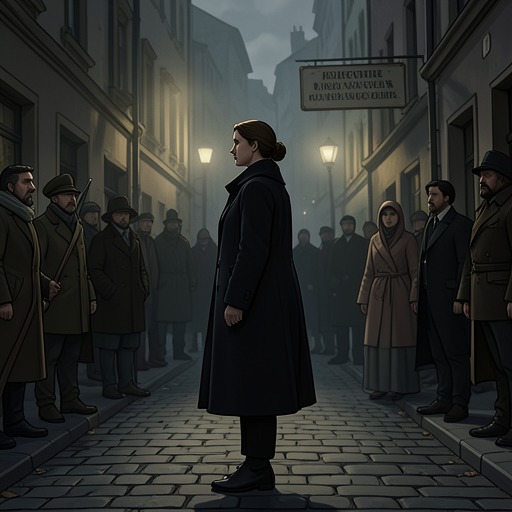
Later, information brought by Dr. Dussel describes night raids: military vehicles moving through the streets, searches for Jewish residents, and families being taken away. Anne records that officials sometimes used lists and that a bounty could be offered for each person found. She compares the hunts to the pursuit of enslaved people, then immediately insists on their seriousness. The account also emphasizes who was endangered: the sick, older people, children, babies, and pregnant women were not exempt. The diary’s shift between reported detail and Anne’s response makes the raids legible as both a system of pursuit and a source of helplessness for those who had escaped it.
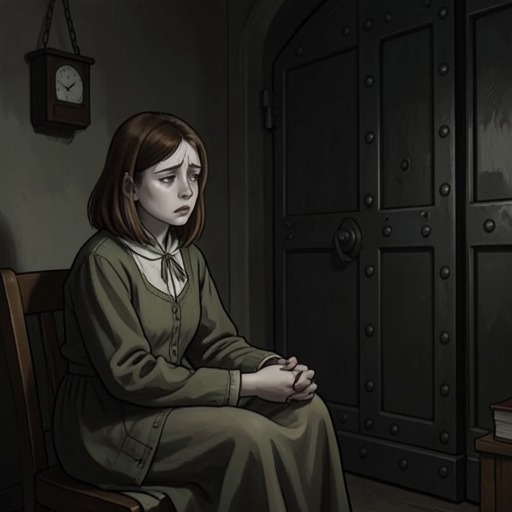
That helplessness is not abstract. Anne writes that the Annex residents were physically safe for the moment yet worried about loved ones they could no longer help. She felt guilty sleeping in a warm bed while friends might be suffering outside. Elsewhere, she sets their relative safety against the forced removal of families, the separation of men, women, and children, and the fear experienced by Christians whose sons were sent to Germany. The contrast does not erase the difference between hiding and deportation; it shows how the knowledge of others’ suffering entered the hidden household and unsettled any uncomplicated sense of refuge.
Hiding as a precarious refuge
The office building offered concealment, not freedom from danger. The residents had to regulate ordinary activities around the possibility of being heard downstairs. A burglary made those practical vulnerabilities explicit: when Peter found doors open, the household followed its emergency rules, keeping quiet, avoiding water, and dressing by a set time. The thieves took cashboxes, blank checkbooks, and the residents’ sugar coupons—an immediate material loss in a household already dependent on limited supplies. The incident demonstrates how exposure could arrive through an ordinary breach of building security, not only through a planned search.
Another security scare brought further changes. The residents were told not to go downstairs; Peter was assigned a patrol, a night watchman was hired, and a barricade was to be made from white bedsteads. Restrictions on windows and toilet use tightened the household’s routine. Anne describes the resulting condition as being chained to one place, with no rights but many obligations. Her account links the larger fact of persecution to the intimate administration of time, movement, noise, and shared space: safety depended on continual precautions, while even a minor lapse could provoke new constraints.
The diary also records forms of communal life that persisted under these conditions. During Hanukkah, the residents exchanged small gifts and lit candles for only ten minutes because candles were scarce; Mr. van Daan made a wooden menorah. Such details do not soften the danger or stand in for the persecution outside. They show how practice and continuity were maintained within the narrow margins available to people in hiding, while public exclusion and immediate insecurity defined those margins.
Testimony, identity, and publication
Anne’s understanding of persecution is shaped by her position: she is a Jewish teenager in hiding, recording some events from within the Annex and receiving other news through people who can still move outside or through radio broadcasts. Her diary is therefore valuable as a situated testimony, not an all-seeing account. The distinction between direct experience, reported information, and inference is especially important in her descriptions of deportation and killing. The text preserves what the threat meant to someone living under it without claiming that she witnessed every event she describes.
The threat also sharpens the question of identity. In a later reflection prompted by danger at the Annex, Anne writes that the residents are Jews with no rights and many obligations, and expresses hope that they will again be people, not only Jews. The statement registers the force of imposed classification: persecution makes Jewish identity a basis for restriction and danger, even as Anne imagines a future in which people will not be reduced to that category. Her reflection is both a response to immediate vulnerability and an insistence that Jewish identity and collective survival cannot simply be wished away.
The diary’s public form developed alongside its private witness. Anne began writing for herself on June 12, 1942. In 1944, after hearing Gerrit Bolkestein of the Dutch government in exile call for wartime letters and diaries to be collected after the war, she decided to prepare a book based on her writing. She revised and edited material for this purpose while continuing her original diary, producing distinct versions rather than a single fixed manuscript. The decision makes the diary not only a record of events but a deliberate effort to preserve testimony for future readers.
After the residents were arrested, Anne’s diaries were found on the floor by Miep Gies and Bep Voskuijl. Miep put them away for safekeeping and, after the war, gave them unread to Otto Frank, who selected and edited material for the first published version. The edition was shorter in part to fit its publisher’s series; it also omitted passages about Anne’s sexuality and unflattering passages about family members and other Annex residents. The later expanded edition restored material from Anne’s own versions, making the publication history central to how readers encounter her: the familiar public testimony emerged through both her revisions and subsequent editorial choices.
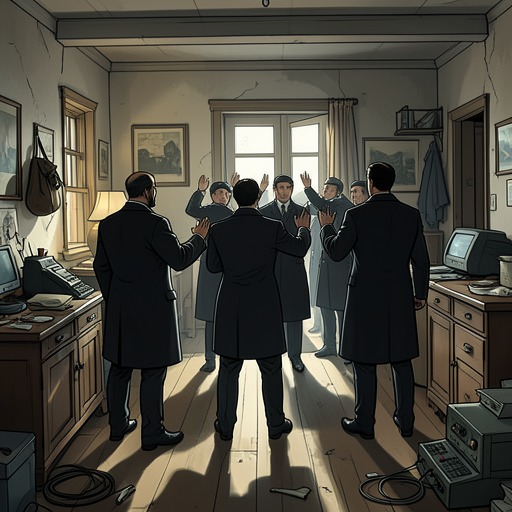
The residents’ arrest on August 4, 1944, marks the abrupt end of the diary’s surviving entries, which stop on August 1. The eight were taken first to a prison in Amsterdam and then to Westerbork; on September 3 they were deported on the camp’s last transport, arriving in Auschwitz three days later. The record thus closes not with a narrated account of what followed but with a documented gap between Anne’s last entry and the fate of the people in hiding. That boundary underscores the diary’s double significance: it bears witness to the danger pressing in on the Annex, while its survival allows a young person’s account—partial, revised, and preserved by others—to remain in public memory.